
Higher Learning Institutions Directed to Align Curricula With Job Market Demands
The Deputy Minister of Finance, Mr. Mshamu Munde, has reiterated the government’s call for higher education institutions to conduct regular curriculum reviews to ensure that graduates leave the institutions with skills that are directly relevant to the changing needs of the job market. He said the directive is aimed at addressing the growing gap between academic training and workplace needs.
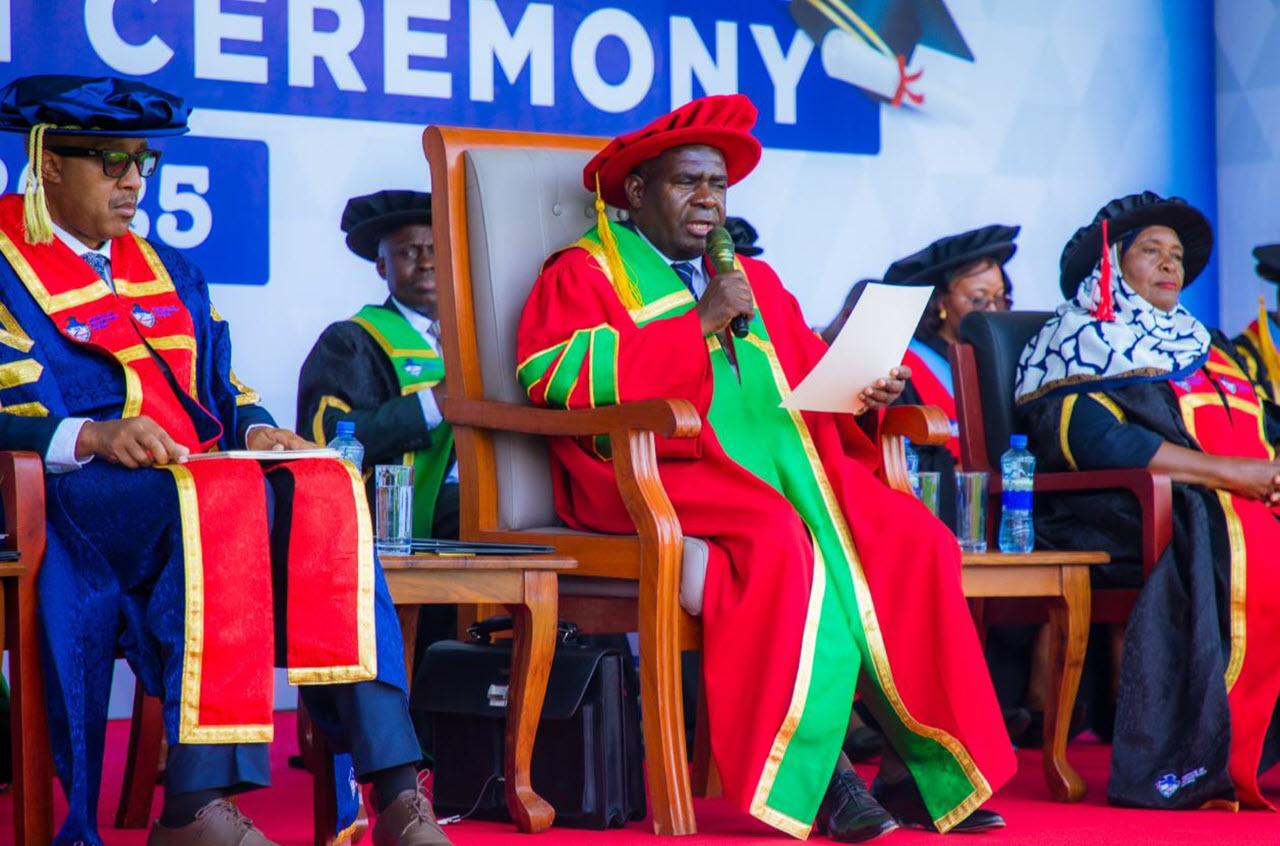
Speaking yesterday in Arusha during the 27th graduation ceremony of the Institute of Accountancy Arusha (IAA), Mr Munde stressed that universities and colleges must respond proactively to rapid changes driven by technology, modern management practices and the widespread use of digital systems. The ceremony saw a total of 4,821 students graduate at certificate, diploma, advanced diploma and degree levels.
According to the deputy minister, the pace at which the labour market is changing requires institutions of higher learning to go beyond traditional teaching methods. He urged universities to strengthen modern teaching infrastructure and expand practical, hands-on training so that students acquire competencies aligned with advancements in science and technology.
“The labour market is changing at an unprecedented pace,” Mr Munde said, warning that failure to align curricula with these changes would continue to produce graduates who are ill-prepared for employment.
His remarks come amid regional data showing high levels of graduate unemployment in East Africa, largely attributed to skills mismatches. A study by the Institute of Universities in East Africa (IUCEA) shows that unemployment linked to skills gaps affects 51 percent of graduates in Kenya, 55 percent in Burundi, 52 percent in Rwanda, 61 percent in Tanzania and 63 percent in Uganda. The sectors most affected include services, communications, technology and the professions.
Mr Munde cited IAA as an example of an institution responding positively to the government’s vision. “I am pleased to see that IAA has been at the forefront of implementing this vision,” he said, noting that the Institute has made significant investments in infrastructure, quality teaching, research, technology and responsive curricula designed to address societal challenges and needs.
He called on other higher learning institutions to follow a similar path by adopting curricula that emphasise practical-oriented teaching and job readiness. Particular attention, he said, should be given to fields such as accounting, finance, procurement, ICT, marketing, auditing, public relations, economics, taxation, banking, insurance, tourism and business administration.
Addressing the graduates, the deputy minister urged them to apply the knowledge they had acquired responsibly to bring about positive change. “You have been well prepared. Go and make a difference in the sectors you will serve,” he said, adding that the true value of education is demonstrated through integrity, creativity, patriotism and commitment in both the public and private sectors.
He further encouraged graduates to use their education to drive personal and technological advancement, improve their families’ livelihoods and contribute to national development.
Earlier, IAA rector Prof Eliamani Sedoyeka said the graduating class comprised 2,810 men and 2,011 women, marking an increase of 308 graduates compared to last year’s total of 4,513.
IAA Governing Council chairperson Dr Mwamini Tulli said the Institute continues to strengthen the quality of teaching and learning in line with national higher education regulatory guidelines, a move that has enhanced academic performance and improved graduates’ competitiveness in the job market.
One of the graduates, ICT specialist Evalight Mboya, said she plans to use her skills to create employment opportunities rather than add to the number of unemployed youth. “The value of our education will be proven by how we use it to advance ourselves, our families and the nation at large,” she said.
The government’s directive underscores a broader push to ensure that higher learning institutions are producing graduates who are not only academically qualified but also equipped with practical skills relevant to current and future labour market demands.
Editor’s Picks:
- HESLB Announces Completion of First-Quarter Allowance Payments for 2025/2026 Academic Year
- NECTA Releases 2026 Form Six Examination Timetable, Exams to Start in May
- Government Announces New Education Structure in Tanzania
- HESLB Signs Digital Transformation Deal With South Africa’s Adapt IT